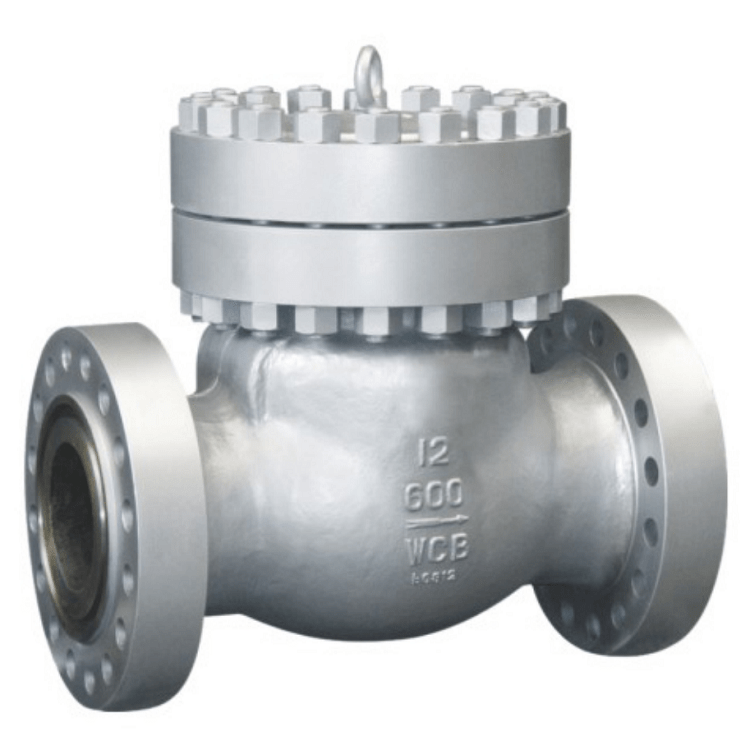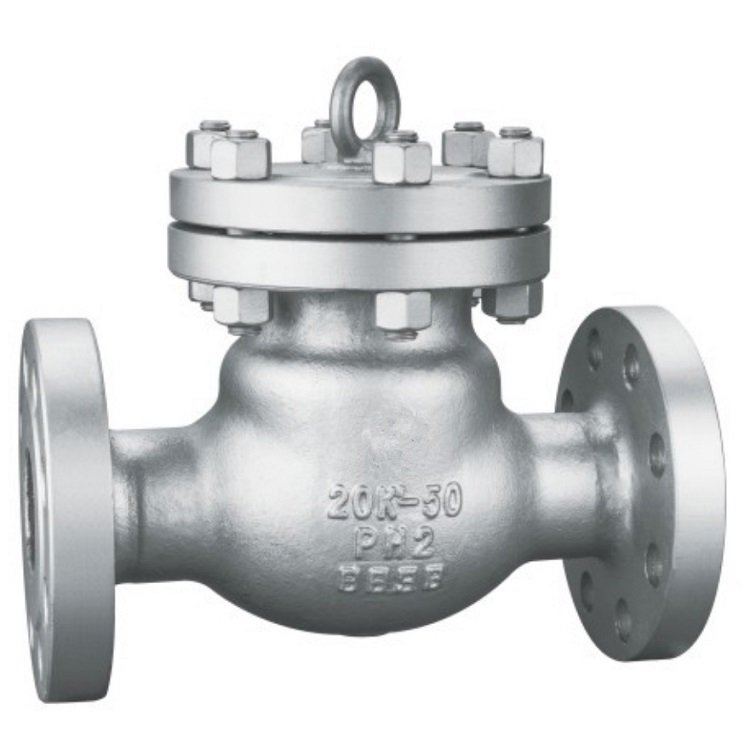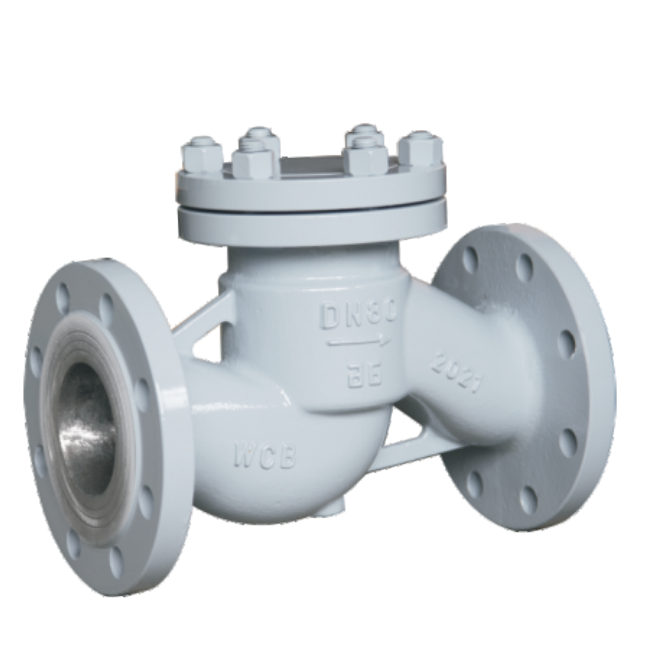
How the spring-assisted lift mechanism works
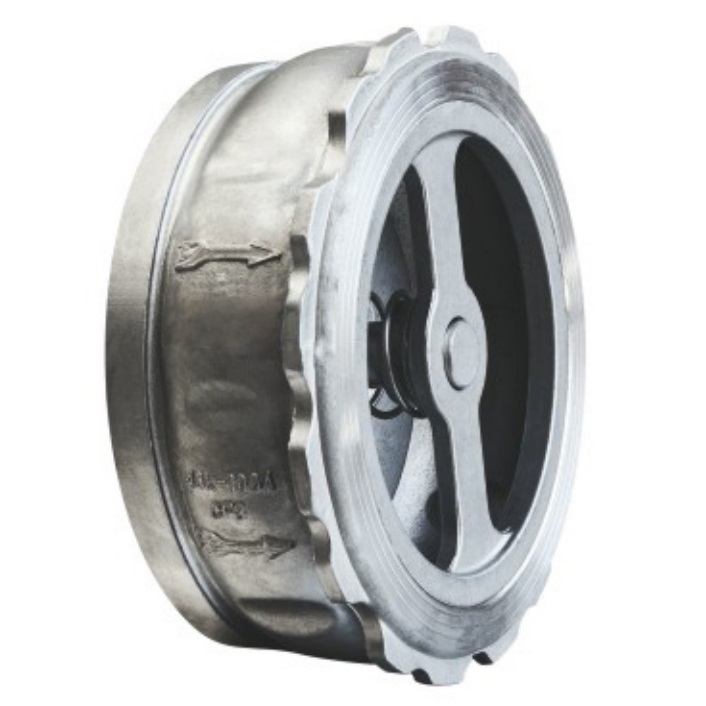
Forward differential pressure produces an opening force on the closure member. The valve opens when that force overcomes the closing forces, including the spring and any relevant weight. As forward differential and flow decline, spring assistance helps return the closure member toward its seat; reverse pressure supports closure. A fall in upstream pressure does not, by itself, make the spring reopen the valve.
Match the valve to the flow, not only the pipe size
Provide minimum, normal and maximum flow and the pressure available across the valve. Ask for the offered opening differential and pressure-loss information. A valve that is not adequately open at the actual flow may operate unstably. Do not remove or change the spring to solve a flow problem without approved instructions.
Orientation and reverse-flow conditions
This catalogue item is identified for horizontal service. Confirm the exact mounting orientation, flow arrow and maintenance clearance in the supplied drawing. A spring does not prove that this particular construction permits every orientation. Where pump trips, pulsation or water hammer matter, review the actual operating sequence and closing response; spring assistance is not a non-slam guarantee.
Frequently asked questions
Will a spring make the valve open when inlet pressure falls?
No. Opening requires sufficient forward differential force to overcome the closing forces. Ask for the opening differential and operating-flow limits of the offered configuration.
Can I install it vertically because it has a spring?
This valve is intended for horizontal service. For a different installation orientation, request confirmation for the required valve size and flow direction.
What should I send if the existing check valve chatters or slams?
Provide the flow range, upstream and downstream pressures, pump start/stop sequence, installation layout and a description of the symptom. Selection must consider the valve response and system conditions together.
General technical references—not product certificates: Check-valve operating principles · Spring-assisted opening differential
Prepare a quotation for this valve
Give the flow and reverse-flow conditions needed to assess the spring-assisted lift action, not just the nominal pipe size.
- Flow cases
State minimum, normal and maximum flow with units, fluid phase, density or other relevant properties and any solids or pulsation.
- Pressure conditions
Provide inlet/outlet pressures for those cases, allowable pressure loss and pump shutdown or reverse-pressure conditions. Ask for the offered opening differential rather than assuming a universal value.
- Installation
Send the horizontal piping layout, flow arrow direction, nearby equipment and maintenance access. Any different orientation needs confirmation for this construction.
- Material and inspection
Specify medium and temperature, body/trim/spring/seal material requirements, required tightness and inspection documentation. Ask which evidence can be provided for the offered assembly.
Documents to agree before supply
- Offered opening-differential and pressure-loss information for the relevant flow conditions
- Assembly drawing with permitted orientation and maintenance space
- Ordered material schedule and agreed pressure/sealing test scope
Ask which documents are available for the offered configuration and agree their scope before supply. A catalogue picture is not a certified drawing or test report.
Download a buyer enquiry checklist
Download this valve enquiry checklist (TXT). This is a fill-in purchasing worksheet, not a technical datasheet. Unknown values can be left blank.
Send an enquiry for this valve · valve leakage troubleshooting checklist · Engineering selection and technical Q&A