Function and rating
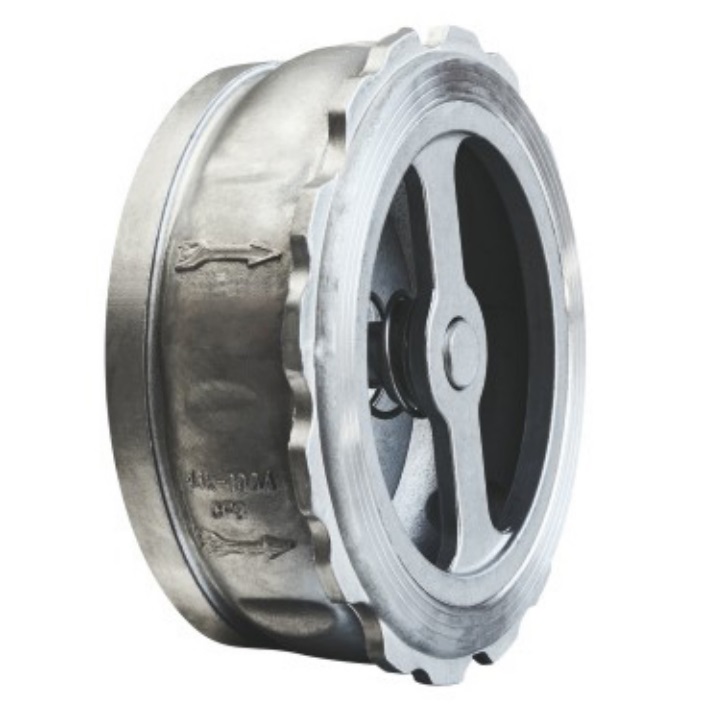
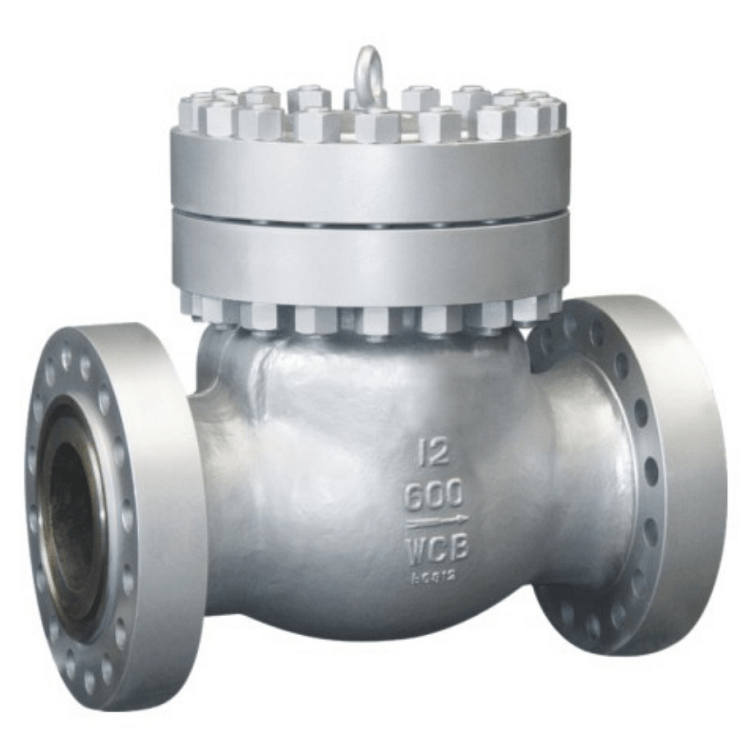
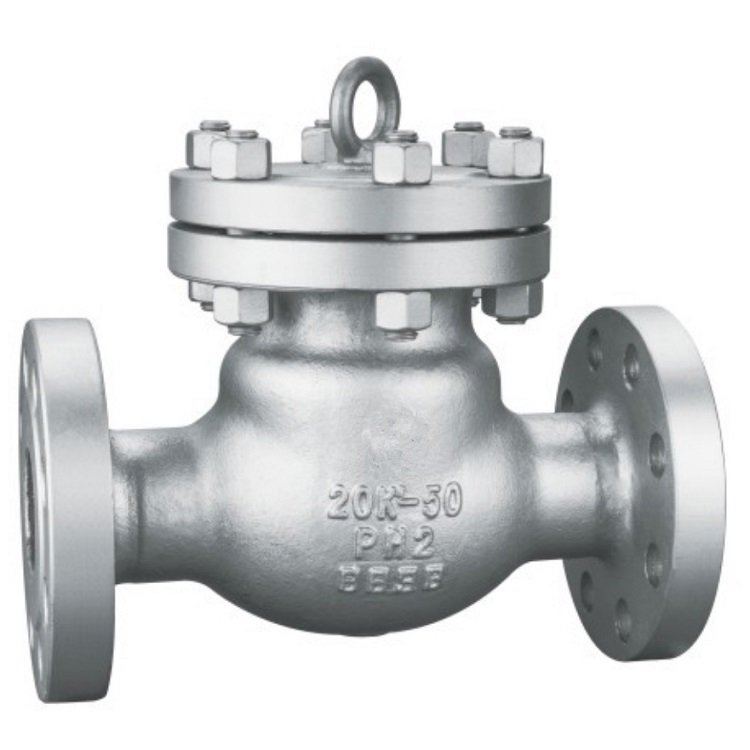
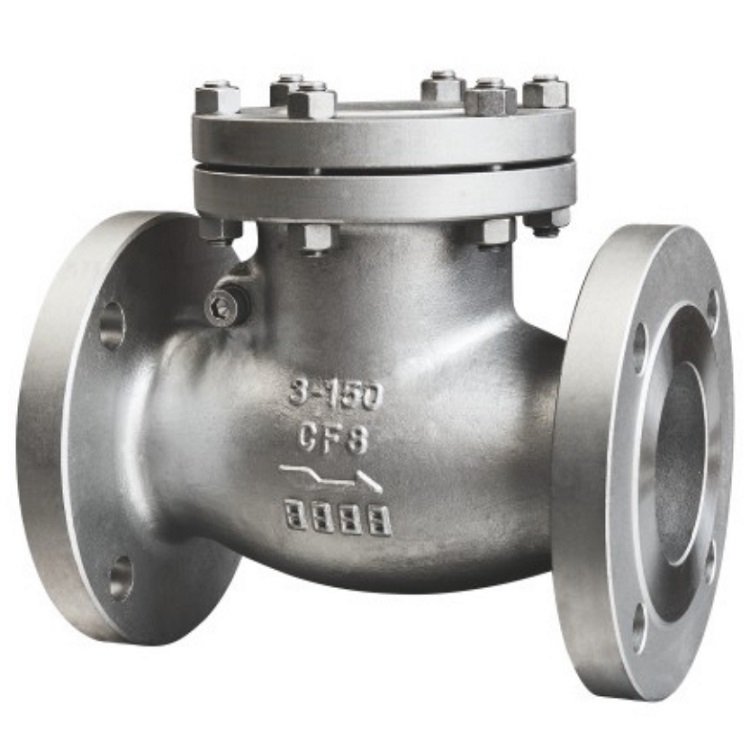
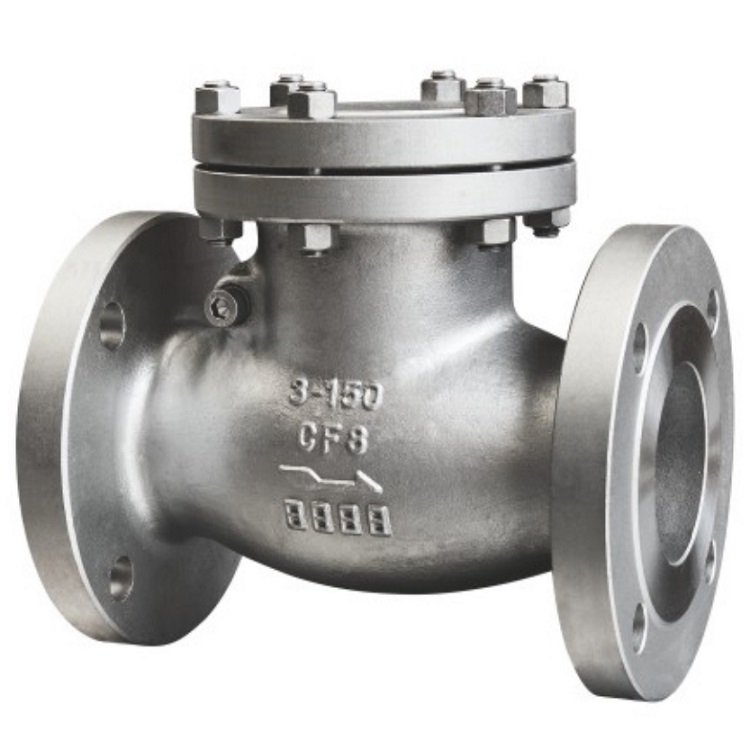
A swing check valve opens under forward flow and closes as flow falls or reverses. It is an automatic non-return valve, not a positively actuated isolation valve. The catalogue identifies a flanged Class 150 arrangement; the supplied body, trim and seat materials must be specified separately.
Class 150 is not a 150 psi maximum
Class is a rating designation, not a direct pressure conversion. Select the required class, size and material, then check the pressure-temperature rating and flange dimensions for the complete assembly.
Check installation and transient conditions
Provide the proposed orientation, flow direction, normal and minimum flow, reverse-flow conditions and pump start/stop sequence. Confirm disc travel clearance and the permitted installation orientation in the selected valve instructions. If slam or water hammer is a concern, assess the system transient and valve response; the words swing check do not establish non-slam performance.
Frequently asked questions
Can this check valve replace a manual shut-off valve?
No. Its closing action depends on flow conditions. Provide a separate, suitable isolation arrangement where the process requires positive isolation.
Will it eliminate water hammer?
Not necessarily. Supply pump shutdown and reverse-flow information so that the valve closing response and system transient can be reviewed together.
Can I install it vertically?
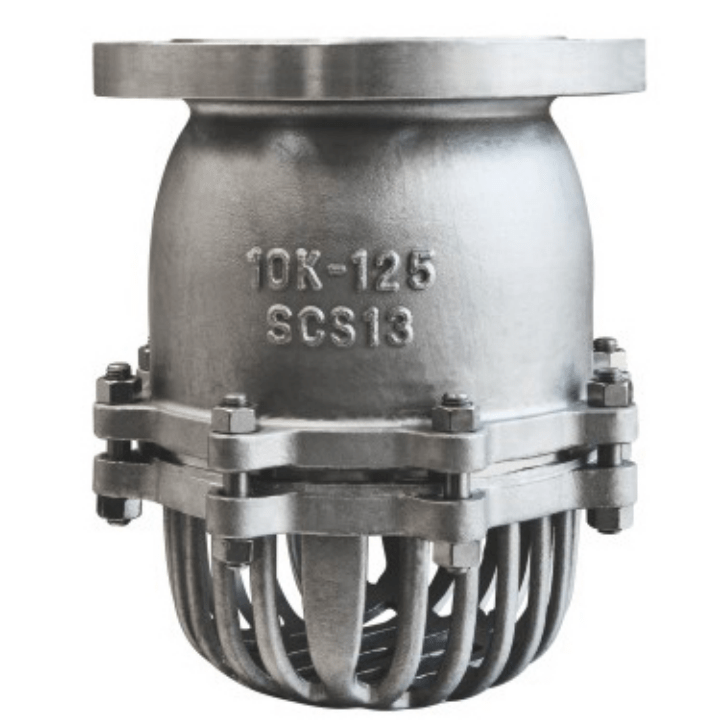
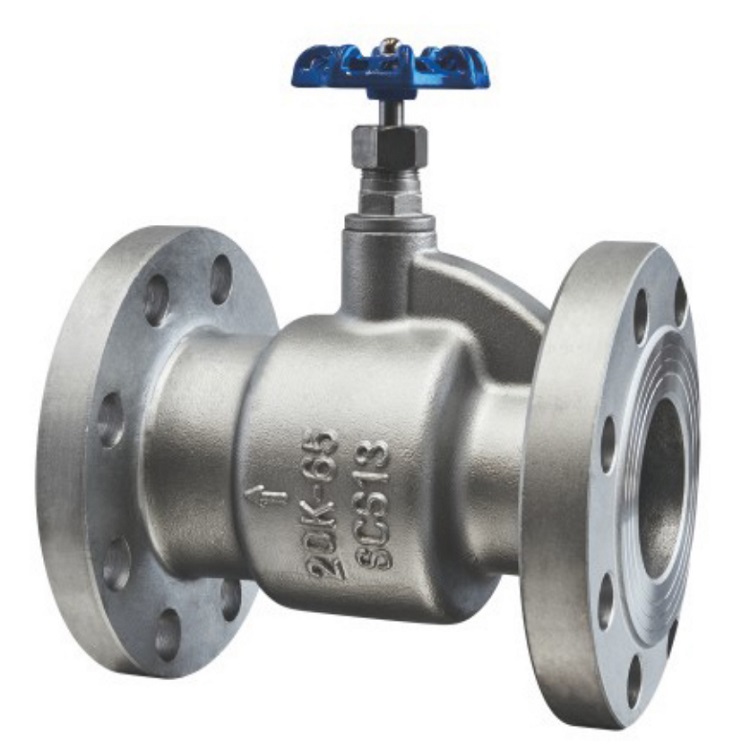
Confirm the permitted orientation and flow direction for the offered construction. A catalogue photograph is not an installation instruction.
General technical references—not product certificates: ASME valve rating scope · ASME flange rating scope
Prepare a quotation for this valve
For pump or process-line backflow protection, submit the flow and transient information as well as the flange size.
- Process data
Fluid, temperature, pressure, normal/minimum flow and foreseeable reverse flow.
- Pipeline layout
Orientation, direction, nearby fittings, available disc clearance and pump start/stop arrangement.
- Acceptance
Required leakage criteria, inspection documents and any slam or transient constraint.
Documents to agree before supply
- Drawing identifying the permitted orientation and disc clearance
- Material and pressure-temperature documents for the offered assembly
- Agreed inspection and leakage-test scope
Ask which documents are available for the offered configuration and agree their scope before supply. A catalogue picture is not a certified drawing or test report.
Download a buyer enquiry checklist
Download this valve enquiry checklist (TXT). This is a fill-in purchasing worksheet, not a technical datasheet. Unknown values can be left blank.
Send an enquiry for this valve · valve leakage troubleshooting checklist · Engineering selection and technical Q&A