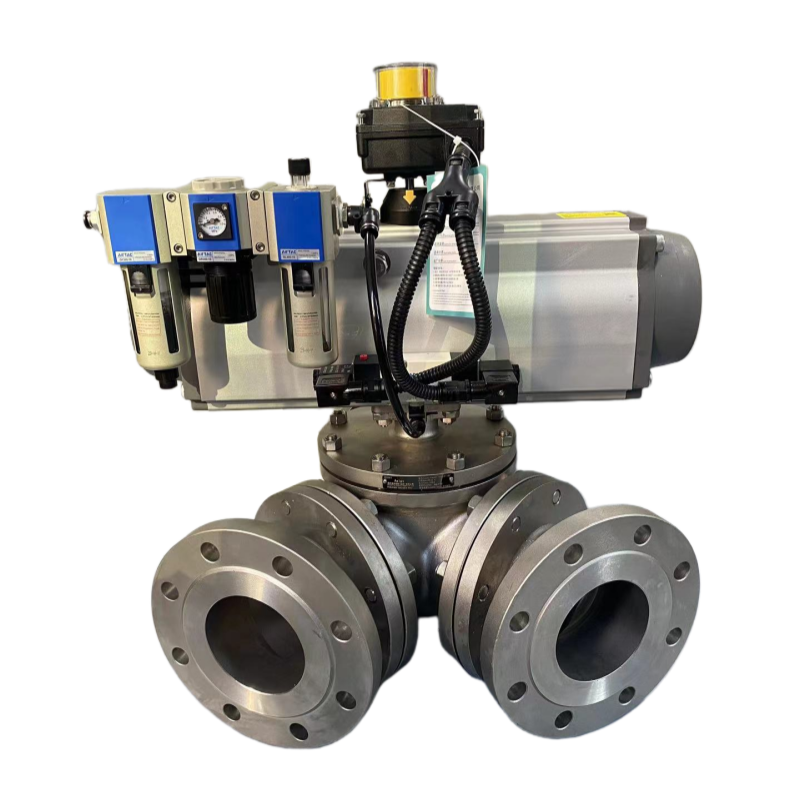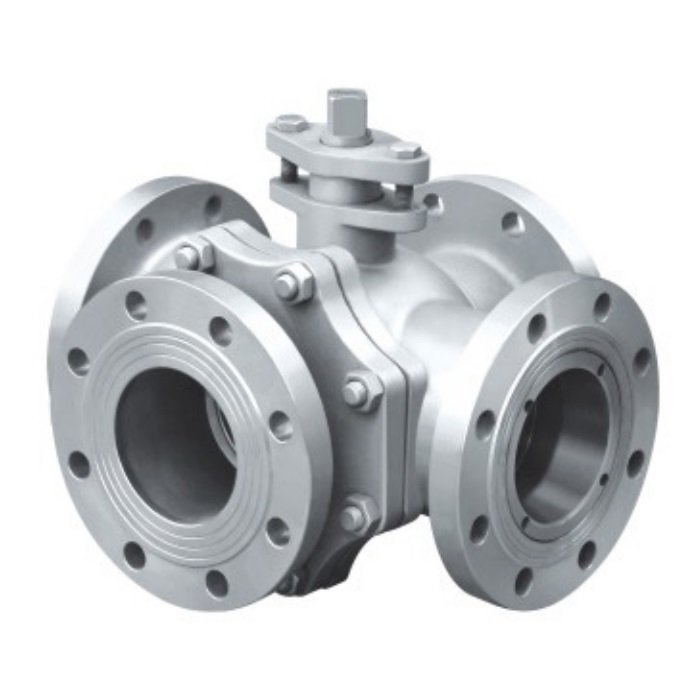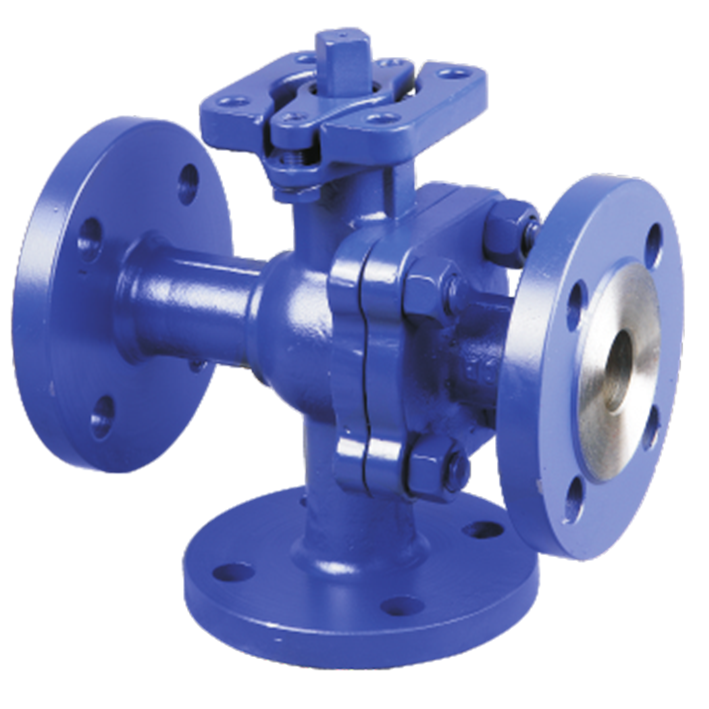
Manual WCB three-way flanged ball valve with support bracket
This product uses a three-port ball arrangement for flow switching. The WCB body designation does not determine the ball, stem or seat material; confirm those parts in the approved material specification.
The support bracket and manual operating arrangement must be checked against the product drawing. L-port and T-port options are different ball configurations, not a guarantee that every connection pattern is available in every operating position.

Three-way ball valve questions
How are L-port and T-port arrangements selected?
Specify the required connections between all three ports in each operating position. L-port and T-port balls have different connection possibilities, but the actual flow paths and blocked positions must be confirmed from the approved drawing and travel stops.
Does the manual valve have a power-failure position?
A manually operated valve has no automatic power-failure action. If an actuator is ordered, its spring return, air or power supply, control logic and fail position must be specified and confirmed for that assembly.
What documents are needed before ordering?
Confirm the body and trim materials, connection and face-to-face dimensions, seat compatibility, complete-valve pressure–temperature limits and agreed inspection criteria. The support bracket alone does not prove an actuator interface standard or a pressure rating.